My cart

Your cart is empty.

Nutrition & Health31 Aug 26
12 min

Dairy-free Plant-Based Yogurts: Which Ones Contain Real Probiotics?

Not all store-bought plant-based yogurts contain real probiotics. Only those fermented with live bacterial strains, precisely named on the label, not pasteurised after fermentation and kept refrigerated actually provide active cultures. The others, the majority, particularly those made shelf-stable at room temperature or flavoured as desserts, may be "yogurts" in marketing terms, but they are microbiologically inactive products.

Yaourts végétaux sans lactose : lesquels contiennent de vrais probiotiques ?

What is a real fermented plant-based yogurt?

The question is not as straightforward as it seems. The word "yogurt" is now used to describe very different products, some of which bear little resemblance to what the original legal definition established.

The regulations: dairy yogurt ≠ plant-based yogurt

In France, the term "yogurt" is legally reserved for dairy products fermented with two specific live cultures: Lactobacillus delbrueckii subsp. bulgaricus and Streptococcus thermophilus. A product can only be called "yogurt" if it meets both conditions: the strains are identified and the cultures remain alive until the use-by date.

Plant-based alternatives do not fall under this legal designation and must use a different name, such as "fermented plant-based speciality", "plant-based alternative to yogurt", or similar¹. This legal distinction has a practical consequence: the presence of live cultures is not guaranteed by a single standard for plant-based products, it depends on each manufacturer's choices.

The difference between fermented and inoculated

This is the point most consumers are unaware of. A product can be inoculated, meaning cultures have been added to the mixture, without being biologically fermented, meaning those cultures have not actually transformed the product over several hours at a controlled temperature.

A genuinely fermented plant-based product results from 6 to 12 hours of active fermentation, during which bacteria transform the sugars in the base into lactic acid, develop flavour, thicken the texture and produce beneficial metabolites. Simply adding cultures to an industrially thickened base does not produce the same transformation or the same benefits.

Live cultures or pasteurised after fermentation?

This is the second major pitfall: some manufacturers ferment their products correctly, then pasteurise them to extend their shelf life and make them stable at room temperature. The result is that the bacteria responsible for the fermentation are killed, and the final product no longer contains any live cultures. This is typically the case with plant-based yogurts sold at room temperature, often in cartons or pouches.

A probiotic is a live microorganism that provides a beneficial effect when consumed in sufficient quantities². A pasteurised product, whatever its other qualities, therefore cannot be described as probiotic.

Five criteria for reading a label (and not being misled)

Here is the checklist to use in the refrigerated aisle. Each criterion can be checked in just a few seconds, and together they are enough to distinguish a genuinely fermented plant-based product from a marketing-driven one.

Criterion 1: the strains should be named

The label of a genuinely fermented live product should precisely name the strains used, including their genus and species, for example Lactobacillus bulgaricus, Streptococcus thermophilus, Bifidobacterium animalis, Lactobacillus acidophilus. Without precise identification, there is no way to scientifically assess their effectiveness³.

Vague labelling ("lactic cultures", "cultures", "probiotics" without further details) is an initial reason for caution. It is not necessarily disqualifying, but it almost always points towards a product that does not go much further than marketing.

Criterion 2: the words "live cultures"

This should be clearly stated on the packaging. Some manufacturers go further and specify a minimum quantity guaranteed until the use-by date (for example, "10⁷ CFU/g at use-by date"), which is a sign of a product that has been carefully formulated.

Conversely, a plant-based yogurt that talks only about "yogurt flavour", "creamy texture" or "smoothness" without mentioning cultures is almost always pasteurised or chemically stabilised. The viability of the strains until consumption is an essential condition for a probiotic effect⁷. Health claims associated with cultures are also strictly regulated: only scientifically validated claims may appear on packaging, which explains the cautious language used by serious brands⁶.

Criterion 3: a short ingredient list

A good plant-based yogurt contains no more than three to five ingredients: the plant base (soy, coconut, almond, oat, cashew), water, possibly salt or a natural stabiliser (agar-agar, pectin), and the cultures. That's it.

Every additional ingredient, modified starch, xanthan gum, emulsifiers (E471, E415), flavourings, colourings, signals a greater degree of industrial processing, which often goes hand in hand with shortened fermentation or post-fermentation pasteurisation. The rule is simple: the shorter the ingredient list, the closer the product is to a genuinely fermented artisanal product.

Criterion 4: sugar, the hidden trap

Flavoured plant-based yogurts (fruit, vanilla, chocolate, coconut-mango) often contain 8 to 15 grams of added sugar per pot, equivalent to two to four sugar cubes hidden inside a product perceived as healthy. Added sugars should be limited in the daily diet, and their excessive presence in products perceived as healthy is one of the less visible drivers of excessive sugar intake⁸.

Choosing plain yogurt and sweetening it yourself just before eating, with fresh fruit, a spoonful of raw honey or nut butter, remains the best option.

Criterion 5: where it is sold and how it is stored

A genuinely fermented live product needs to be refrigerated, between 2 and 6°C, with a short use-by period of two to four weeks. A product sold at room temperature in the grocery aisle, with a shelf life of several months, has necessarily been pasteurised or stabilised, as live cultures would not survive under these conditions.

Simply looking at where the product is sold already eliminates 40% of the false fermented products on the market. The best products are those that need to go straight into the fridge when you get home.

Yaourts végétaux sans lactose : lesquels contiennent de vrais probiotiques ?

Plant-based options: which base matters most?

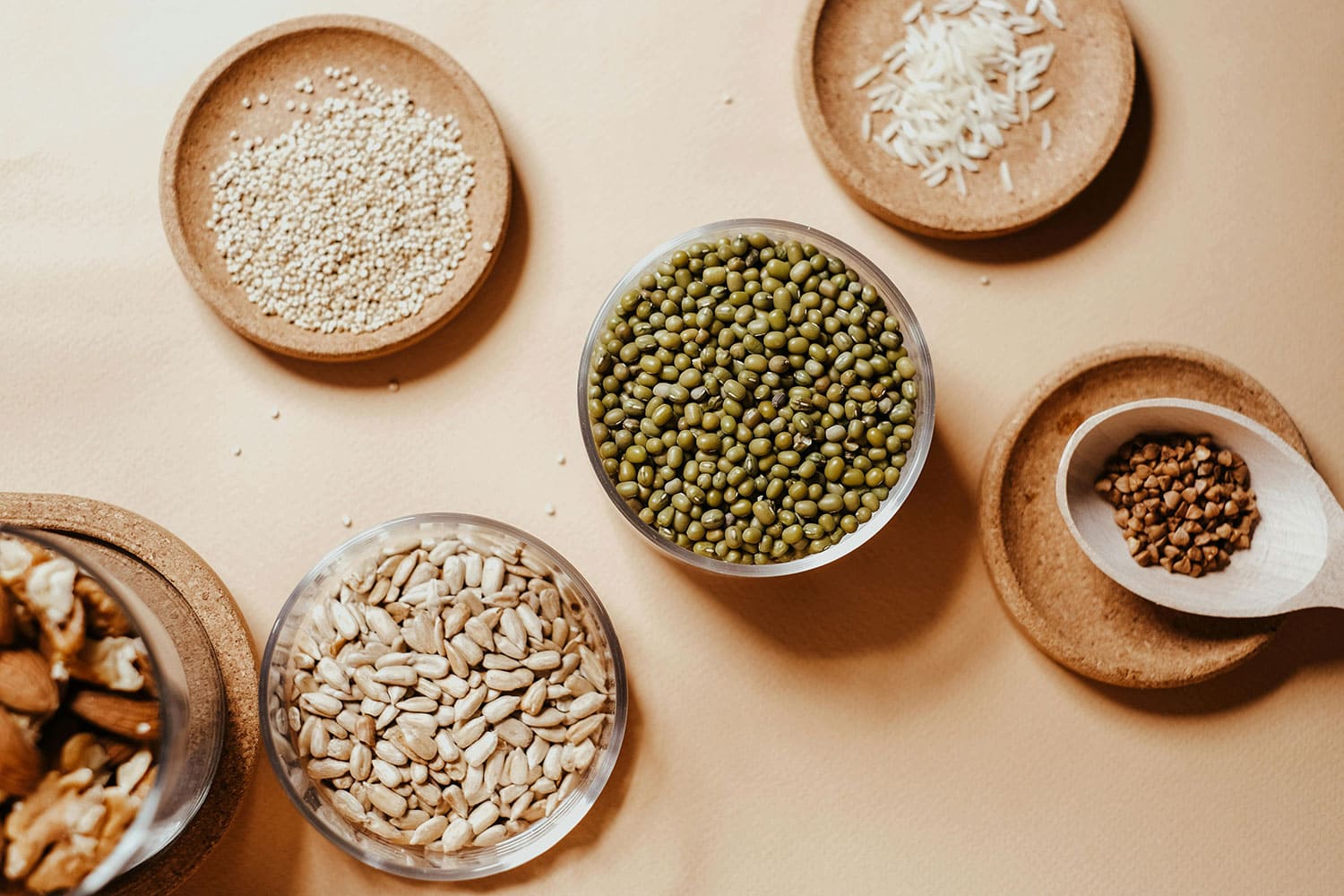
Once the previous criteria have been met, the choice of plant base determines the product's nutritional profile. No single base is "the best" in absolute terms, each has its strengths and limitations, and variety remains desirable. Applied research into the fermentation of plant-based matrices, soy, almond, oat and coconut, has progressed considerably over the past ten years, particularly in terms of strain optimisation, finished-product stability and preservation of bioactive compounds⁹.

Soy: nutritionally the closest to dairy yogurt

Soy yogurt is the only option whose nutritional profile truly approaches that of cow's milk yogurt: around 4 g of protein per 100 g, a thick texture that works well with fermentation, and a neutral flavour. It is also the most extensively studied fermented plant-based alternative in the scientific literature, and the only one whose calcium content can reach that of dairy yogurt when fortified. Today, it is the best-documented base for a genuine nutritional substitute⁵.

Coconut: indulgent but low in protein

Coconut yogurt has a rich texture and a highly appreciated creamy taste. However, it contains little protein (0.5 to 1.5 g/100 g) and is higher in saturated fat than other plant-based options. It is an excellent food for enjoyment, but it does not nutritionally replace conventional yogurt. It works best as a dessert or as the base of a more complete breakfast with fruit, nuts and seeds.

Almond: mild, a source of calcium when fortified, but low in protein

Almond yogurt has a mild, delicate flavour. Its protein content is modest (1 to 2 g/100 g), but calcium-fortified versions can reach 120 mg per 100 g, comparable to dairy yogurt. The fermented almond matrix is particularly well accepted by the digestive tract and is well suited to lactic fermentation with several strains. It is also the base used by Minimiil, chosen for its neutral flavour and good digestive tolerance.

Oat: great texture, higher in carbohydrates

Oat yogurt has a particularly creamy texture thanks to the beta-glucans naturally present in the grain. It contains slightly more carbohydrates than other bases (5 to 8 g/100 g), while its protein content remains moderate (2 g/100 g). Beta-glucans can also provide a mild prebiotic effect and benefits for cholesterol when consumed regularly, an interesting additional advantage. Interactions between fermented plant-based matrices and microbial signatures are now among the areas being studied in microbiome research⁴.

Cashew: the most artisanal, but expensive

Cashew yogurts, often produced by specialist plant-based artisans, offer a particularly smooth texture and remarkable depth of flavour. Their protein content is intermediate (3 g/100 g). Prices remain high, and production is often limited to local distribution channels. An excellent option when the budget allows.

The main categories available in French stores

Without providing an exhaustive list of brands, which would quickly become outdated, it is useful to understand the main categories found on shelves and their typical profiles.

Specialist organic brands: the best probiotic-to-price ratio

French and European organic brands specialising in fermented plant-based alternatives (Sojade, Abbot Kinney's, Andros Bio, Nature & Cie, Vrai) generally offer the products closest to genuinely fermented live foods: named strains, active cultures, short ingredient lists, refrigerated storage and short use-by periods. They remain the benchmark category for everyday consumption.

Major dairy brands and their "plant-based versions"

Major established dairy brands have all launched plant-based ranges, including Alpro, Danone (Alpro / Yofix) and Lactalis (Nutropia). Quality varies considerably between products within the same brand: some premium ranges are properly fermented with clean formulations, while others remain closer to stabilised sweet desserts. A short ingredient list and clearly identified strains remain the best filters.

Supermarket own brands: highly variable

Supermarket own-brand plant-based yogurts (Carrefour Bio, Monoprix Bio, U Bio, Lidl "Vemondo") can offer excellent value for money, but quality varies considerably. Some lower-priced organic ranges (particularly Vemondo) have made the effort to offer genuinely fermented live products with identified cultures, while others remain technically stabilised products. Checking the label is essential, brand by brand.

What is best avoided

Three categories are best avoided by default: shelf-stable plant-based yogurts in cartons or pouches (pasteurised after fermentation), highly sweetened and flavoured plant-based yogurts (often 12-18 g of sugar per pot), and products marketed as "plant-based desserts" rather than yogurt (rarely containing live fermented cultures).

These products are not dangerous, they are simply microbiologically inactive and often too high in sugar for everyday consumption.

Yaourts végétaux sans lactose : lesquels contiennent de vrais probiotiques ?

Making your own plant-based yogurt: is it a viable option?

Given the limitations of commercial products, many people turn to homemade yogurt. It is possible, economical and often excellent, provided you understand a few basic principles.

Equipment and ingredients

A yogurt maker, or simply a switched-off oven with a pan of hot water, or an insulated bottle, is enough to maintain the 40-45°C required for fermentation. The ingredients: an unsweetened plant-based base (soy or almond work best), a small amount of natural stabiliser (agar-agar, 0.5 g/L) if you want a thicker texture, and a starter culture in the form of a store-bought plant-based yogurt (one tablespoon to inoculate one litre) or specific freeze-dried starter cultures (available in organic food stores or online).

The process: simple and reliable

Heat the plant-based base to 40-45°C, add the starter culture, mix, pour into sterilised jars and leave to ferment for 8 to 12 hours at this temperature. Then refrigerate for at least 4 hours to stop the fermentation and allow the texture to develop. The result is a genuinely fermented live product, containing the selected strains, which can be kept refrigerated for one week. Each new batch of yogurt can then be used as a starter for the next, for up to 4-5 generations before using a fresh starter culture becomes preferable.

Precautions

Hygiene is essential: clean equipment, sterilised jars, careful temperature control, and attention to smell and appearance. Any fermentation with a sharp or unpleasant smell, unusual colour or suspicious appearance should be discarded immediately.

For people who are immunocompromised, pregnant or living with chronic health conditions, it is preferable to stick to verified commercially produced products, as industrial reproducibility provides an additional level of food safety. For everyone else, making plant-based yogurt at home is probably one of the most economical and rewarding ways to enjoy a genuinely fermented live product every day. It is also part of the broader revival of home fermentation¹⁰.

And where does Minimiil fit into all this?

Minimiil is not a plant-based yogurt, it is a 60-millilitre fermented plant-based shot, more concentrated in live cultures and quicker to consume. However, it follows the same principle as a genuinely fermented plant-based yogurt: a plant-based foundation (organic almond milk), active fermentation with four named probiotic strains (Lactobacillus plantarum, L. rhamnosus, Streptococcus thermophilus, L. delbrueckii), no post-fermentation pasteurisation, refrigerated storage and a short use-by period. It also contains 2.1 grams of prebiotic fibre from agave inulin, turning the live cultures into a synbiotic combination once they reach the colon. Organic, Nutri-Score A, with no added sugar.

It is not designed to replace your breakfast plant-based yogurt, it is a morning ritual designed to maximise probiotic intake in a single sip. The two can also be combined: a Minimiil shot for a targeted intake, alongside a fermented plant-based yogurt with oats, fruit and nuts for a complete breakfast.

FAQ: your questions about plant-based yogurts

Are plant-based yogurts really equivalent to dairy yogurts?

In terms of fermentation and probiotics, yes, when they are properly made. Nutritionally, only fortified soy yogurt truly approaches the profile of dairy yogurt in terms of protein and calcium. Other plant-based options have different nutritional profiles, which can be an advantage rather than a drawback when aiming for dietary diversity.

What is the best plant-based option for gut health?

Variety comes first. Alternating between soy, almond, oat and coconut provides a diverse intake of fibre, polyphenols and flavours. If you had to choose just one, soy remains the benchmark for nutritionally complete everyday use, provided it comes from European non-GMO sources.

How many plant-based yogurts can you eat per day?

One to two pots per day are well tolerated by the vast majority of adults as part of a varied diet. Going beyond this does not provide any measurable additional benefit and may cause digestive discomfort in some people, particularly with bases higher in FODMAPs, such as certain oat-based products.

Are shelf-stable plant-based yogurts healthy?

They are not dangerous, but they do not contain live cultures, as the pasteurisation that allows them to be stored at room temperature destroys them. They can be useful as an occasional convenience food, but they do not replace a genuinely fermented live product when it comes to probiotic intake. Always check the added sugar content, which is often high in these ranges.

Can you make plant-based yogurt with a standard yogurt maker?

Yes. Most yogurt makers work perfectly well with unsweetened soy milk, almond milk or oat milk. Simply inoculate the base with a spoonful of store-bought plant-based yogurt containing live cultures, or with a sachet of specific starter cultures available in organic food stores. Fermentation time is generally longer than with dairy milk (10 to 12 hours).

Is a fortified plant-based yogurt equivalent to conventional yogurt for calcium?

Yes, when properly fortified. A plant-based yogurt (soy or almond) fortified with calcium carbonate or Lithothamnium algae can provide 120 mg of calcium per 100 g, comparable to cow's milk yogurt. This is not systematic, so always check for the words "fortified with calcium" on the label.

Can you eat plant-based yogurt during pregnancy or breastfeeding?

Yes for all bases except soy, which should be consumed in moderation during pregnancy and breastfeeding due to its isoflavone content⁸. Almond, oat and coconut yogurts do not present any particular issue, simply check that they have been pasteurised according to standard food safety requirements, as is the case for commercially produced industrial products.

References

¹ DGCCRF: yogurt designation
² FAO/WHO: Probiotics
³ Inserm: probiotics
⁴ INRAE: French Gut
⁵ PMC: fermented plant-based alternatives
⁶ EFSA: health claims
⁷ WGO: Probiotics Guidelines
⁸ ANSES: sugars and additives
⁹ PMC: plant-based matrix fermentation
¹⁰ Info.gouv: fermentation

This article is intended for informational and educational purposes. It is not a substitute for medical or dietary consultation. The brands mentioned are provided as educational examples. Always check the labels of the products you purchase, as formulations regularly change depending on the manufacturer.

minimiil-blog-bibliotheque-boisson-vegetale

Our blog

Dive into the world of gut microbiome and nutrition!

Access the blog
minimiil-Rose-FAQ

Got questions?

Take a look at our FAQ, we answer all your questions.

View FAQ