The Central Role of Fiber in Healthy Bowel Function
Fiber is a type of carbohydrate found in plants that the human body cannot digest. It reaches the colon intact, where it performs three distinct functions, each contributing to healthy bowel movements. Understanding these three roles is essential, rather than simply trying to "eat more fiber" without knowing which types matter or why.
The Essential Role of Fiber in Healthy Bowel Function
Soluble fibers, such as inulin, pectins, beta-glucans, and gums, dissolve in water and form a viscous gel when they come into contact with food in the digestive tract. This gel has several beneficial effects: it increases stool bulk without making stools harder, slows the absorption of sugars, which helps regulate blood glucose levels, and most importantly, serves as a preferred fuel source for fermentation by the gut microbiota.
They are found primarily in apples, pears, citrus fruits, oats, legumes, cooked carrots, and psyllium. They are particularly beneficial for people who experience hard stools and difficulty passing them.
Insoluble Fiber: Getting Things Moving Again
Insoluble fibers, such as cellulose, hemicellulose, and lignin, do not dissolve in water and retain their structure throughout digestion. Their role is primarily mechanical: they increase stool bulk and weight, absorb water, and stimulate intestinal motility by triggering the peristaltic contractions that move digestive contents through the gut.
They are found in wheat bran, whole grains, the outer layers of legumes, raw green vegetables, and fruits with edible skins. They are essential for maintaining regular bowel movements, but they are often poorly tolerated when introduced too quickly. A sudden increase can lead to bloating and abdominal discomfort. Gradual introduction makes all the difference.
Fiber and the Gut Microbiota: Why Fermentation Matters
Beyond their mechanical and water-retaining effects, fiber plays a major biological role by nourishing the gut microbiota. According to Inserm, the colon is home to nearly 100 trillion bacteria, some of which ferment dietary fiber into short-chain fatty acids, including butyrate, propionate, and acetate. These molecules are essential for the health of colon cells and for the proper functioning of intestinal motility³.
A gut microbiota that is well nourished with fiber produces short-chain fatty acids that naturally support regular bowel movements. By contrast, a depleted microbiota slows intestinal transit. This is why a diet low in plant-based foods can lead to persistent constipation that will not be resolved by simply adding fiber for a short period. The gut ecosystem itself must first be gradually restored.
How Much Fiber Do You Need Each Day, and How Can You Get Enough?
The Official Recommendation: 25 to 30 Grams of Fiber Per Day
The French Agency for Food, Environmental and Occupational Health & Safety recommends a daily intake of 25 to 30 grams of fiber for healthy adults, with an emphasis on obtaining fiber from a variety of sources, including fruits, vegetables, legumes, whole grains, and nuts².
This target supports not only healthy bowel function but also metabolic health and gut microbiota diversity. These three aspects are closely interconnected. It also represents roughly three times the average fiber intake currently observed in the French population, highlighting the scale of the nutritional gap that still needs to be addressed.
Where Do We Really Stand?
French epidemiological studies show that the average daily fiber intake ranges between 17 and 20 grams, well below the recommended level. This chronic shortfall, combined with the growing consumption of ultra-processed foods that are low in fiber, contributes to a widespread form of constipation that many people mistakenly consider normal.
The French Gut project, led by INRAE, is mapping these dietary patterns and their impact on the gut microbiota of the French population⁴. Its goal is to identify links between dietary habits and microbial profiles that could help improve disease prevention.
How to Increase Fiber Gradually: Avoid the "Too Much, Too Soon" Trap
This is where many people go wrong. Jumping from 15 to 30 grams of fiber per day almost always makes symptoms worse at first, leading to bloating, gas, abdominal discomfort, and sometimes even paradoxical constipation.
The reason is simple: the gut microbiota has not had enough time to adapt to the increased fiber intake, resulting in excessive fermentation. The best approach is to increase fiber gradually over three to four weeks, adding about two to three grams per week while also increasing fluid intake. This gradual progression is what separates a successful long-term strategy from a frustrating experience that people are likely to abandon.
Foods That Truly Support Healthy Bowel Function
Some foods stand out because of their effectiveness, either due to their high fiber content or because they support bowel function through additional mechanisms that go beyond fiber alone.
Fruit, Especially Kiwifruit and Prunes
Prunes are probably the most well-known food for relieving constipation, and their reputation is well deserved. They combine both soluble and insoluble fiber, sorbitol, a naturally occurring sugar alcohol with a mild osmotic effect, and phenolic compounds that help stimulate intestinal motility. For most people, eating two to three rehydrated prunes per day produces noticeable results within a few days.
Kiwifruit is a more recent addition to the list and has been studied extensively. Several clinical trials have shown that eating two kiwifruits per day significantly improves stool frequency and digestive comfort in people with constipation. In some studies, it has even been better tolerated than psyllium or prunes⁷.
Pineapple, pears with the skin on, figs, and berries also make valuable additions to a bowel-friendly diet.
Legumes and Whole Grains
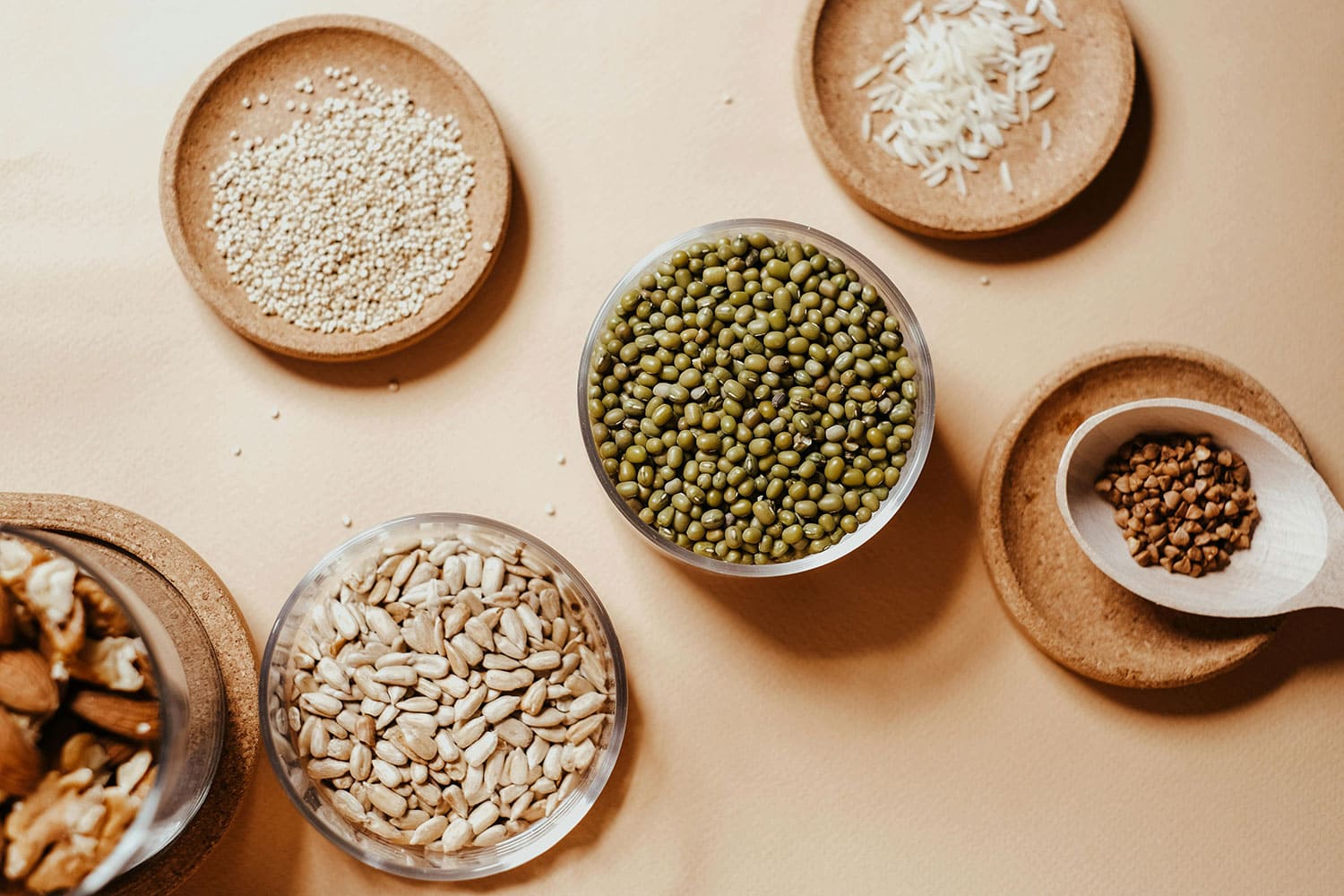
Legumes and whole grains are the true foundation of a high-fiber diet. A serving of lentils, chickpeas, or kidney beans provides between 7 and 10 grams of fiber, about one-third of the recommended daily intake in a single meal.
Whole grains, including oats, sourdough whole wheat bread, quinoa, buckwheat, and brown rice, are excellent alternatives to their refined counterparts and significantly increase the fiber content of a meal. Even a simple switch from white bread to whole grain bread can add an extra 2 to 3 grams of fiber per day for someone who eats bread regularly.
Nuts and Seeds
Almonds, walnuts, hazelnuts, and pistachios provide a valuable combination of fiber and healthy fats. A single handful per day, about 30 grams, is enough to make a meaningful contribution to daily fiber intake.
Flaxseeds and chia seeds deserve special attention. When freshly ground, they release soluble mucilage that is particularly effective in supporting regular bowel movements. Adding one to two tablespoons per day to yogurt, porridge, or a salad leads to noticeable improvements in bowel regularity for many people within 10 to 15 days.
Psyllium: A Powerful Option for More Persistent Constipation
When dietary changes alone are not enough, or while waiting for them to take effect, blond psyllium (ispaghula husk) is a well-established option. This soluble plant fiber, derived from the seeds of Plantago ovata, forms a highly absorbent gel that increases stool bulk and makes bowel movements easier without the need for stimulant laxatives.
Several high-quality clinical reviews have demonstrated its effectiveness in treating chronic constipation, along with an excellent safety profile⁸. In most cases, one to two teaspoons per day, taken with a large glass of water, are sufficient.
What Fiber Needs to Work Effectively
Increasing your fiber intake without addressing three essential factors often leads to disappointment and can even make symptoms worse. Here are the key elements that need to accompany fiber for it to work effectively.
What Fiber Needs to Be Effective
Soluble fiber, in particular, needs water to form the gel that helps improve bowel movements. Without adequate hydration, it can actually make stools harder and worsen constipation, a common mistake.
The general recommendation is to drink 1.5 to 2 liters of water per day, spread throughout the day. This includes water from herbal teas, soups, and water-rich fruits. Increasing your fiber intake without also increasing your fluid intake addresses only half of the solution.
Daily Movement: A Natural Mechanical Trigger
Physical activity supports healthy bowel function through several mechanisms. It mechanically stimulates intestinal motility, shortens colonic transit time, and helps reduce the stress that can disrupt the gut-brain axis. The French National Authority for Health recommends that adults engage in at least 30 minutes of moderate physical activity each day. Brisk walking, cycling, swimming, and gardening all count toward this goal¹⁰.
In practical terms, a 20-minute walk after a meal, especially in the evening, is one of the simplest and most effective ways to help stimulate sluggish bowel movements.
Stress and the Gut-Brain Axis
The gut and the brain are in constant communication. Prolonged stress can alter intestinal motility, increase visceral sensitivity, and disrupt the regularity of bowel movements, sometimes speeding them up, but more often slowing them down.
Practices that help calm the nervous system, such as paced breathing, deep breathing exercises, meditation, and maintaining regular sleep habits, have been shown to improve digestive comfort. They are not a substitute for fiber, but they can help remove one of the hidden factors that contributes to sluggish bowel function in many people.
Supporting the Gut Microbiota at the Same Time
Fiber alone is not enough if the gut microbiota responsible for fermenting it has been depleted. Including a fermented food each day, such as traditional yogurt, kefir, kombucha, raw sauerkraut, or a probiotic shot, helps replenish the gut with live microorganisms and enhances the benefits of dietary fiber.
This is the principle of synbiotics: fiber feeds the bacteria, and the bacteria convert the fiber into short-chain fatty acids that support healthy bowel function. Together, they are far more effective than either one alone, as reflected in French public health recommendations on dietary practices that promote a healthy gut microbiota⁹.


![[square]](http://minimiil.com/cdn/shop/files/minimiil-ingredients-probiotiques.gif?v=1783084021&width=1000)